
Water Leak & Flood Prevention Solutions
Explore water shutoff and flood-prevention products for homes, businesses, buildings, senior living communities, boats, RVs, irrigation systems, beverage machines, commercial and industrial applications, plumbing applications, and more.
- Products that fit 1/4", 3/8", 1/2", 3/4" & 1" supply lines
- Easy to install
- For residential, commercial & industrial use
- Automatic water shutoff
- Volume pricing available
- Real support by phone & email

Why Customers Trust Us
-
Install Guides & How-To Videos
Step-by-step how-to videos and reference material to help you install with confidence.
-
Real People, Real Answers
Call +1 585-643-0131 or email our support team.
-
Secure Checkout
Pay safely with major cards, Shop Pay, Apple Pay, Google Pay and PayPal.
-
US-Based Business
Headquartered in the United States. Products are stocked in and shipped from our own warehouse, with quick 1–3 business day fulfillment.
Let customers speak for us
This product will be a game changer for leaky toilets that can run up a huge bill if the toilet valve fails completely. Great price to help save money.

I just set up my hoses for a washer and dryer. The hoses are substantial and I hope they perform as well as I am expecting. They are very stiff so you may need to think about how to route them beforehand a little bit. I will say the customer service has been exceptional! They have went above and beyond to answer all my questions and concerns with setting them up. I paired them with a floodsafe leak detctor because it is an upstairs laundry.

Great adapter, high quality build. This page is now bookmarked for the future. Thank you!

I am using this product on my motorhome and I am impressed with the fact that it is mechanical and does not require any batteries or electricity to do its job. I witnessed the destruction that can be caused by a busted water line and I am hoping to avoid this experience.
Works perfect for shutting water off after the preset gallonage. Three reset tools should actually be built-in standard since you do use it quite a bit.

These worked exactly as described shut the water off after a certain amount pre-adjusted flow also bought two more that have the reset
I purchased this ght extender for my washing machine hookups. Paired with a 45 elbow, they are perfect to have high flow from the pipes coming down from the first floor. I really liked the knurled swivel head, making installation very easy. HWD got the order shipped quickly and in time for my project date. Awesome sauce!

This is a hard to find brass fitting that was useful for me to check water pressure on a 1/4" compression line. It arrived on time and fit correctly and allowed me to complete my project.

The hose ends were a bit difficult to install on the water supply because of position of the valves so I made it work. This was my plan to avoid any possible issues.
This is a super easy way to totally eliminate the $300 water prevention
leak systems advertised all over the internet. No ridiculous units plugged into wall with water sensors on the floor. I bought one and sent it back. Easy install and your washing machine hose leaks or bursts are eliminated . Highly recommend! Nice how to video!
I like the concept of theses hoses
Worry from water damage from faulty hoses great people needed three hoses l called them and had a grat experience

I installed this to replace my original plastic connection that was over 14 years old that started to crack.
Fast shipping +++
easy install . The brass extension pieces make it a breeze.
Works great
Easy installation

Worth every penny. Superb design and construction
Shop by Category
Find the right shutoff device, kit, hose or fitting for your plumbing.


A Leak Never Stops on Its Own
A running toilet or hidden leak can significantly increase your water bill, and it keeps adding to it every month until the leak is identified. When a supply line bursts or a valve fails, water can flow nonstop, often while you're asleep or away from home. It soaks floors, spreads into walls and ceilings, and can lead to mold, serious property damage and an insurance claim.
-
$15,400
The average homeowners insurance claim for water damage costs about $15,400.
-
$1,400
A toilet with a stuck fill valve could add as much as $1,400 a month to your water bill.
-
1 in 60
About 1 in 60 insured homes files a water damage insurance claim every year.
-
200+
A single running toilet can waste more than 200 gallons of water a day.
-
4,300
A toilet fill valve that is stuck open can waste up to 4,300 gallons of water a day. That is about 3 gallons every minute.
-
9,300+
The average home loses more than 9,300 gallons of water to leaks each year.
-
9%
About 9% of homes have leaks that waste 50 gallons of water or more every day.
-
10%
Fixing easy-to-repair household leaks can save you about 10% on your water bill.
-
61%
61% of homeowners don't perform preventative maintenance and only fix or replace things after they break.
Sources: U.S. EPA WaterSense, Fix a Leak Week fact sheet, Saving Water and Costs in Restrooms and Fix a Leak Week. Homeowner survey: NerdWallet 2025 Cost of Home Safety Report (2,000+ U.S. adults). Insurance claims: Insurance Information Institute (Triple-I), water damage and freezing category, 2019–2023 average. Running toilet cost: EPA WaterSense, Potential Losses From Water Leaks.
What Could a Leak Cost You?
Pick a leak, how long it runs, and your rates. Then flip through the tabs to see what it adds to your water bill, how much damage it can do, and what it costs to protect every fixture.

Prevent Costly Property Damage with Point-of-Use Leak Shutoff Technologies
A supply line, fitting, fill valve or appliance hose can fail without warning, behind a toilet, under a sink or behind a washing machine. When any part fails, water can keep running until someone notices and turns it off. If you are asleep, at work or away, that can mean hours of water soaking into floors, walls and the ceiling below.
Not every leak is obvious. A running toilet can go unnoticed for weeks, until a much higher water bill shows up.
Our shutoff devices measure continuous water volume and automatically shut off the water when the activation setting is reached, so a single failed part does not turn into a flooded room.
How The Mechanical Water Block Stops A Leak
The Water Block is a fully mechanical automatic shutoff valve with no batteries or power needed. It measures how much water flows through it each time water runs, and shuts off when a continuous flow of half a gallon a minute or more goes past the setting you choose.
Where Leaks Start and How We Stop Them
Most leaks start at an appliance or plumbing fixture. Our point-of-use shutoffs install right at each one and stop the water at the source.
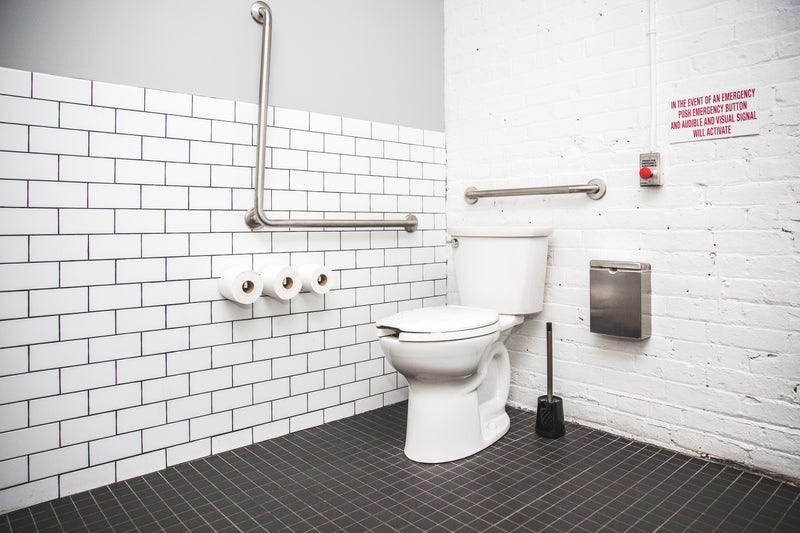
Toilets
Burst supply lines, fill valves that won't shut off and stuck handles. Our toilet shutoff kits stop the water right at the toilet.
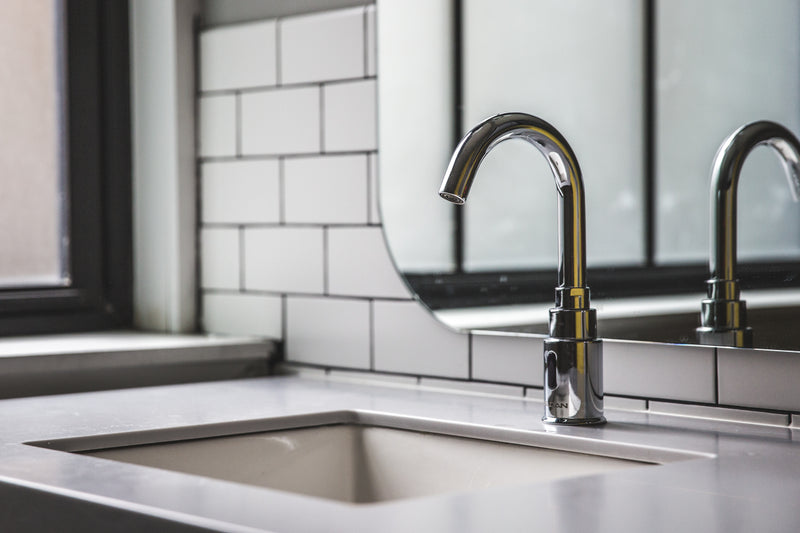
Sinks and Faucets
Failed hot or cold supply lines and faucets left running. Install one shutoff kit on each supply line.

Washing Machines
Bulging or burst hoses and inlet valves that stick open. Our flood prevention hoses and E-WATERBLOCK shut off the water automatically.

Dishwashers
Cracked supply lines and stuck inlet valves. A dishwasher flood prevention hose or dishwasher shutoff kit stops the water at the source.

Refrigerators and Ice Makers
Split water lines and fill valves that stick open. A Water Block kit for 1/4" lines protects the water supply.
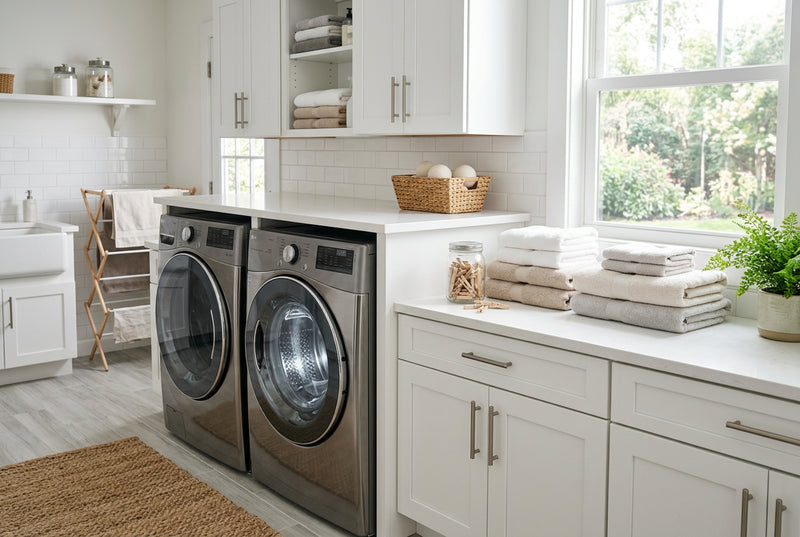
Steam Dryers and Ovens
Worn or failed water supply hoses. Our steam appliance flood prevention hose shuts off the water automatically in the event of a hose failure.
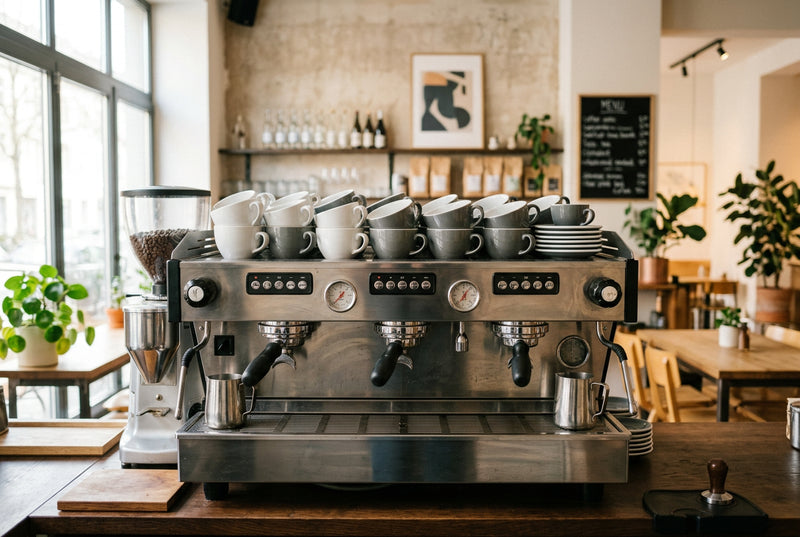
Commercial Coffee Machines
Failed supply lines and fittings, stuck valves or supply line disconnects behind the counter can leak overnight. A Water Block kit installs in-line on the machine's water supply.

Beverage Machines
Soda fountains and ice machines run on small water lines that can split. Stuck valves or supply line disconnects can also cause leaks. Our 1/4" and 3/8" kits fit in-line on the supply.

Irrigation Sprinklers
Broken sprinkler heads, split lines, stuck valves, water line disconnects, debris clogs or timer failures can run unnoticed. The Water Block and E-WATERBLOCK install on 3/4" threaded connections.
Other Applications & Appliances
Fountains and other fixtures or appliances on general plumbing systems. Our devices protect everything downstream of where they install and shut off the water when a failure causes water to keep running.


Straight from appliance manufacturers
Hoses wear out. Appliance manufacturers say replace them every 5 years.
GE Appliances, Whirlpool and Electrolux owner manuals all recommend replacing washing machine water inlet hoses every 5 years to reduce the risk of hose failure, and inspecting them regularly for bulges, kinks, cuts, wear or leaks.
Why Choose Hawkeyed Water Defense?
Contact Hawkeyed Water Defense today to learn more about our products and how to protect your home from water damage.